Circulate |
CirculateEmmett Burns & Luisa Coakley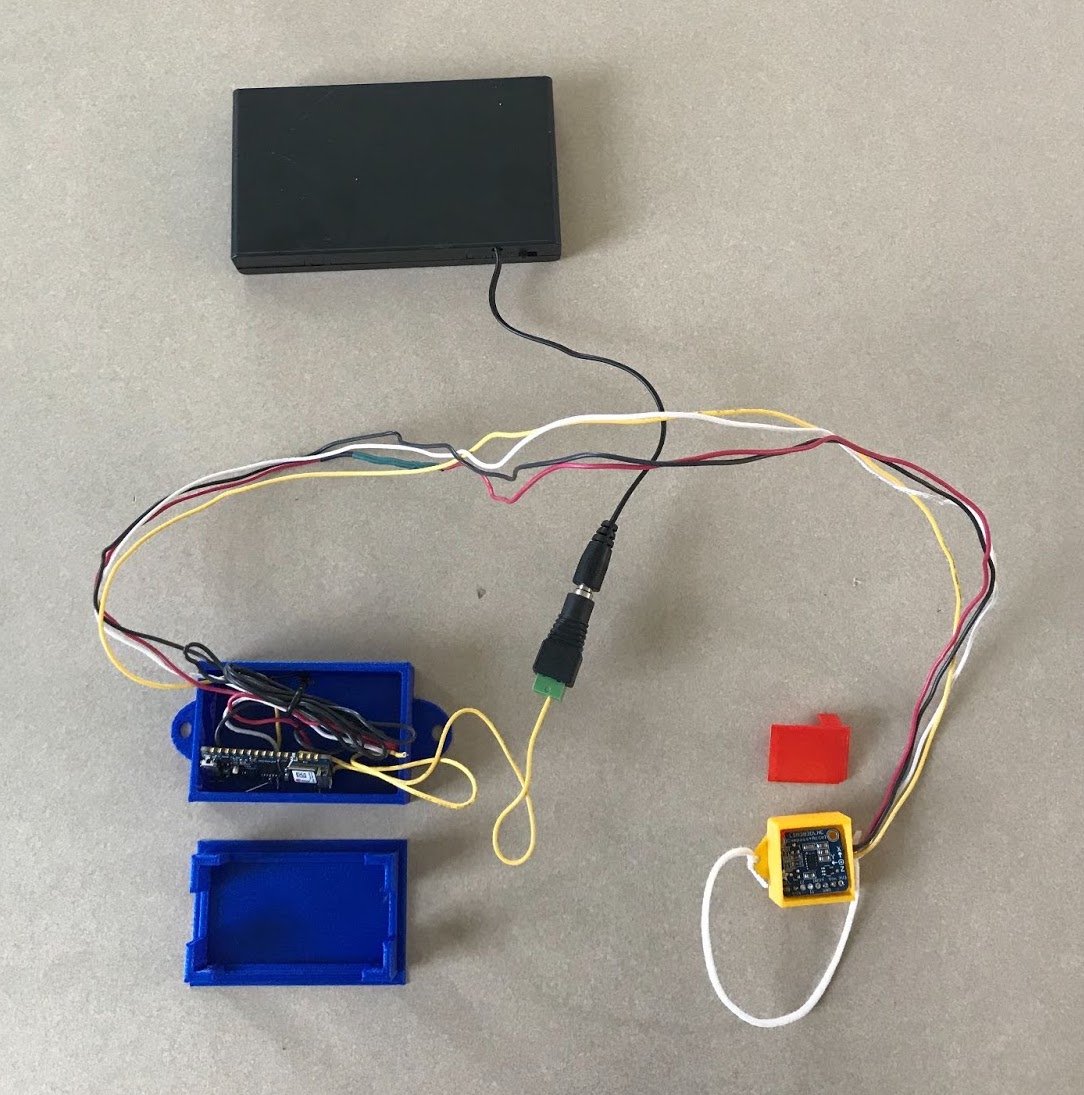
Circulate is intended to create an interactive light environment while listening to music and engaging in activities such as dancing, yoga, and meditation. The user dons an armband that senses the movement of the user and controls WiFi RGB LED's in respect to the movements. The compass attached to the hand, detects the direction while an Arduino sends the information via WiFi to a python sketch on a PC. The data is processed and controls are sent once again via WiFi to the LED's. This project was focusing on exploring the connection between our body movements and the lighting environment during activities geared towards individual relaxation or enjoyment. Multiple transfers of data were sent over WiFi to keep this device as wireless and inhibiting as possible in order to leave the user to move about freely and not interfere with any movements. Circulate explores whether having the light environment be dictated by our movements can aid in creating a more calming, relaxing, and enjoyable experience. Further research could be done to improve the speed of the WiFi transfers, minimize the wires needed to attach the compass to the Arduino, find a more lightweight power source for the Arduino, and work to create a faster way to set up the WiFi and to get the Arduino to run on a battery.
|
|---|---|
COVID-19 |
COVID-19 Symptom CheckerRegan Bragg, Cassidy Correll, Charlotte Rogerson, & Adjoa Tettey-Fio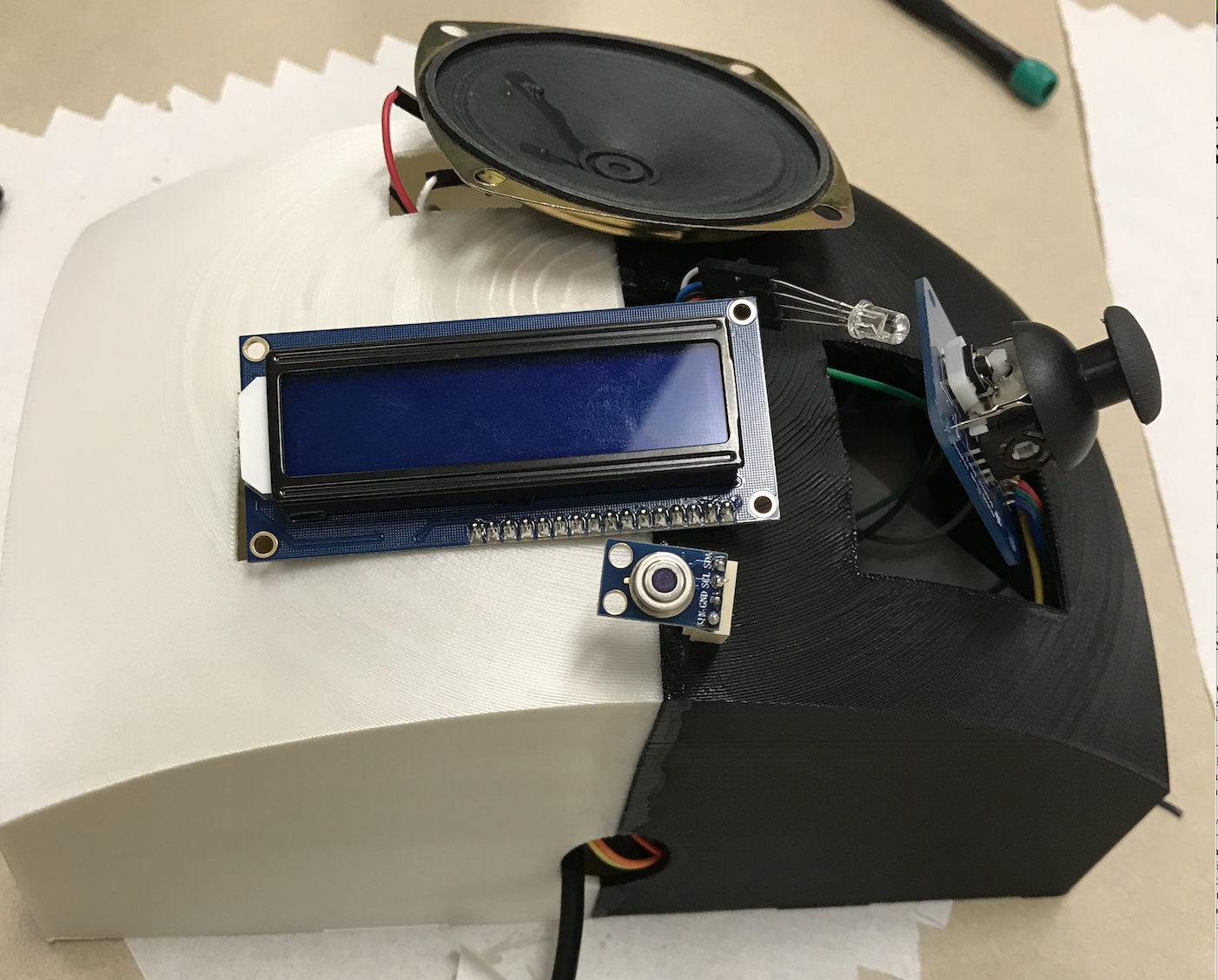
The pandemic has been a frightening time for all people, but it has been especially troubling for children, the elderly, and those with disabilities. How do you know if you might have COVID? How do you monitor your health from home? What do you do if you have the symptoms? It is confusing as the recommendations change and the average person does not understand the different symptoms of COVID-19 and how to get help. Furthermore, the current symptom trackers on the market require smartphones, phone apps, additional devices, and can be complicated to use. Could a robot help solve this problem? This is the question we sought to answer by creating an interactive covid tracking system. Through our design process, we developed the idea of an interactive COVID-19 symptom checker. We improved upon existing trackers with interactivity and accessibility. Our tracker uses multiple ways to display information so it can be used by the deaf and blind, children, and eldery. Our tracker displays questions via an LCD screen and recites them out loud. It also communicates the results of the symptom check in three different ways to the user. Our tracker can also be used by people who do not have a phone or access to the internet. We designed our tracker to look like a stuffed animal to make it more approachable to children and those not comfortable with smartphones. We also performed a study to determine the performance of our system. Users found our system accessible and easy to use.
|
Granular |
Granular Granular SynthesizerIzge Bayyurt, Erik Cohen, Talon Logan, & Adjoa Tettey-Fio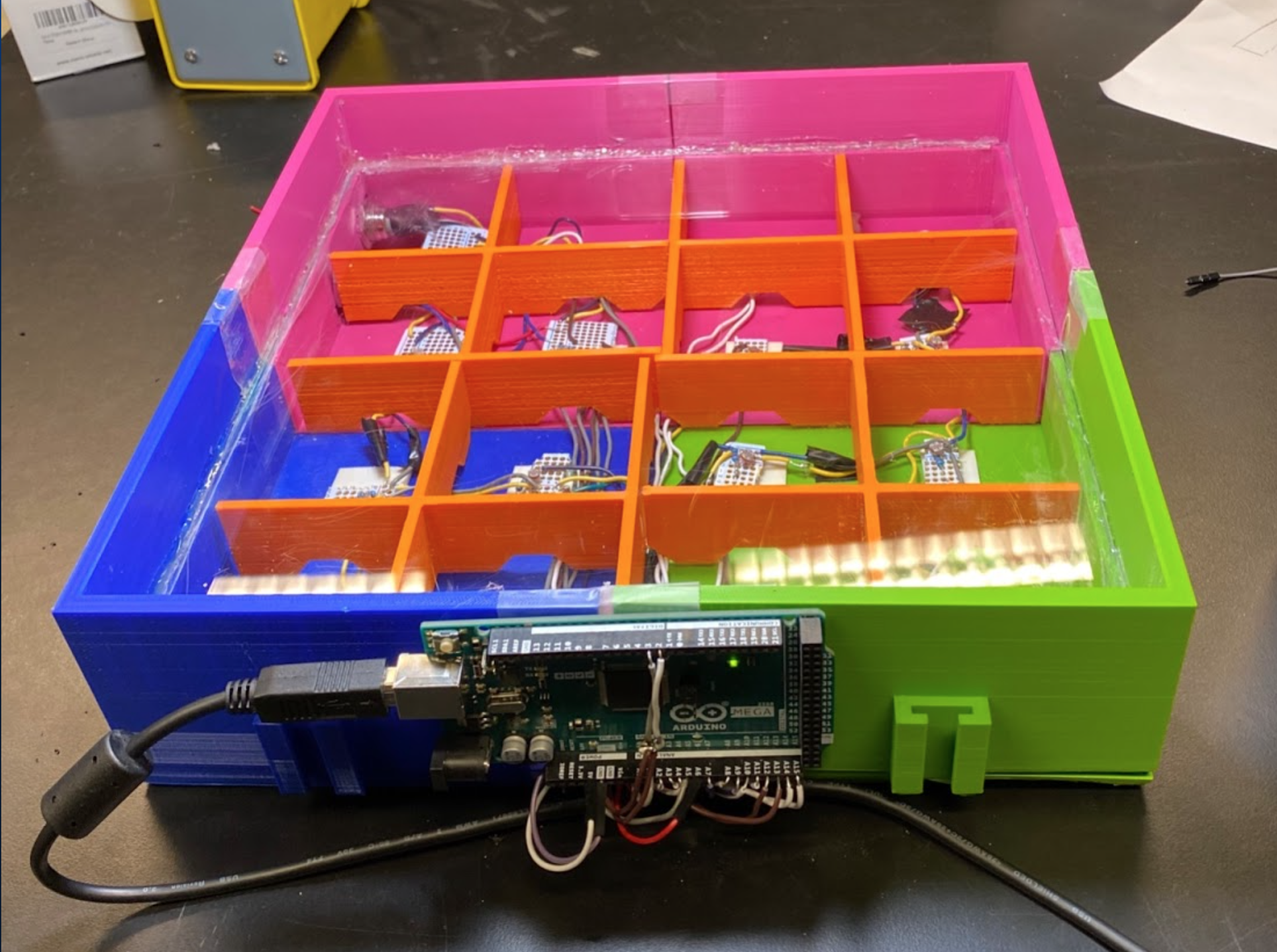
Granular synthesis is a technique that uses granulation to manipulate digital signals in small “grains”. For many, granular synthesis in audio applications is complicated to learn and utilize. Although granular synthesis is often indirectly used to change pitch or playback speed when working in digital workstations, many lack the knowledge required to perform granular synthesis themselves. Our synthesizer seeks to present granular synthesis in a physical medium that changes the way users understand and approach this complicated process. Our system will give users direct control over parameters such as pitch and grain location. Using physical grains of sand as the basis of our system, the system monitors the location of the sand and manipulates the grains of audio in real time. Our system will couple haptic sensations with granulation, introducing a different way for users to think about granular synthesis. Future research in this topic could consider different ways to connect real world actions into the digital process of granular synthesis. An example would be gesture controls. In addition, our device could be used for the granulation of different mediums such as images.
|
Levislate |
LevislateMufaddal Ali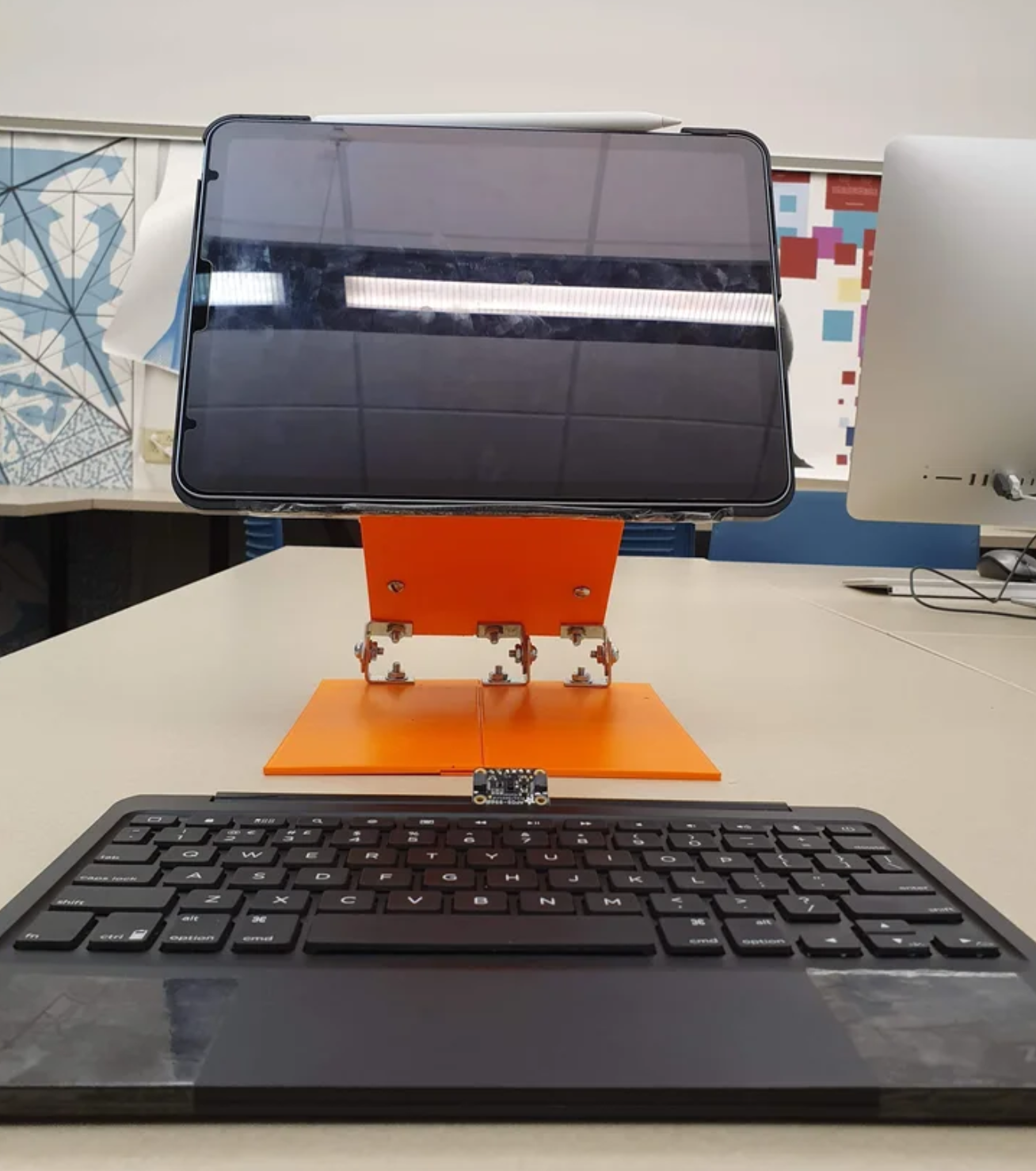
Current tablet computer form-factors are not designed to maximise user-experience. The traditional clamshell form factor has persisted for touch devices, even though it is not the most suitable one. Clamshell designs are prone to causing and exacerbating musculoskeletal disorders and repetitive stress injuries. In this project I suggest a suspended form factor in a product called Levislate, that not only increases the utility of touch screens, but also addresses the physiological issues discussed. This form factor also removes the trackpad and offers an alternative, gesture based navigation system. A pilot behavioral study has assessed the usability and effectiveness of this system, which showed promise in the product's ability to be ergonomically comfortable and easy to use. The positive response to the form factor outlines a path forward for a new way to interact with portable touch-based computation devices.
|
Light Art |
Interactive Light Art InstallationEvan Arthur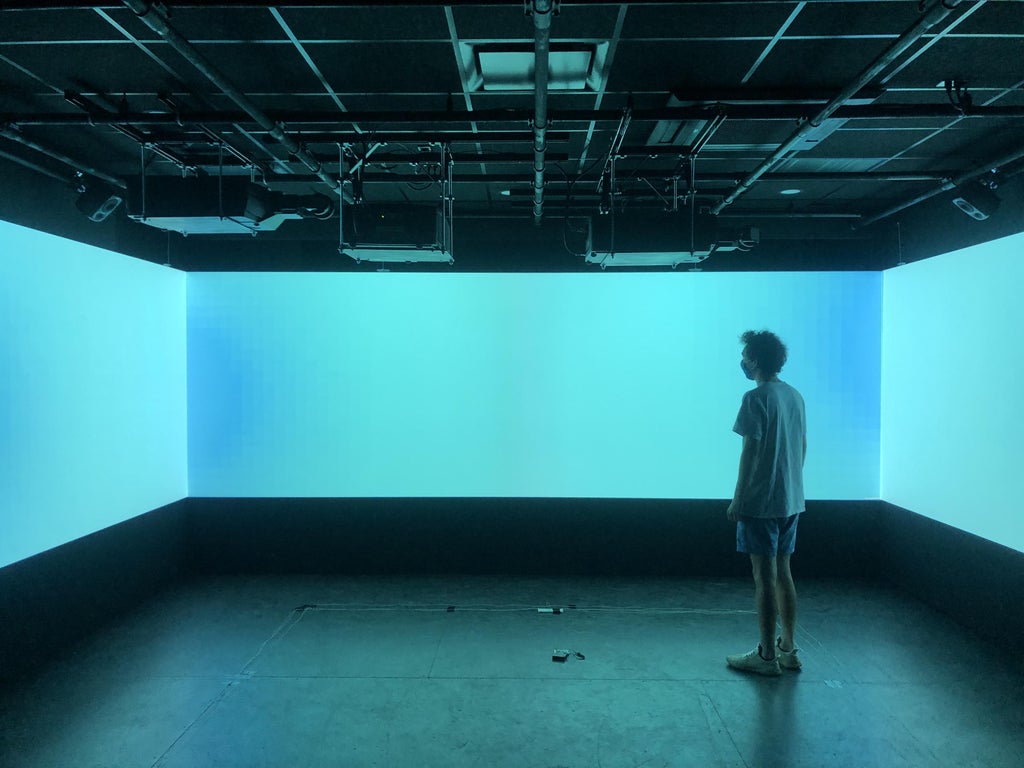
Light art has the power to create strong emotional responses, while interactive art can connect to users on a deeper level than static installations. Stalwarts of the light art movement, such as James Turrell and Olafur Eliasson, create large scale installations that challenge your initial impression of a space, often leaving the user with a deeper appreciation for how color and light affects your perception of the world. On the other hand, researchers creating installations centering on human-computer interaction have created novel interactions between artwork and its viewers, blurring the line between where the artwork ends and the participant begins. Though there seems to be a natural opportunity to create at the intersection of these two mediums, few works have been created that successfully create an interactive artwork while maintaining the emotional power of light art. This project attempts to synthesize the best elements of these distinct mediums to create an interactive light art installation. Using the projectors equipped in the Runnals Media Lab to emit light, the installation uses IR sensors to track user’s position within the space. Furthermore, the sound made by the viewer in the space will affect the space as well, adding another component of interactivity. By combining these two mediums, the installation has the potential for viewers to question their relationship with the built environment and how their actions, coupled with light and color, change their perception of their surroundings.
|
Modular Security |
Modular Smart Home Security SystemVarun Boopathi, Patrick Forelli, Justin Laughin, & Ben Lawlor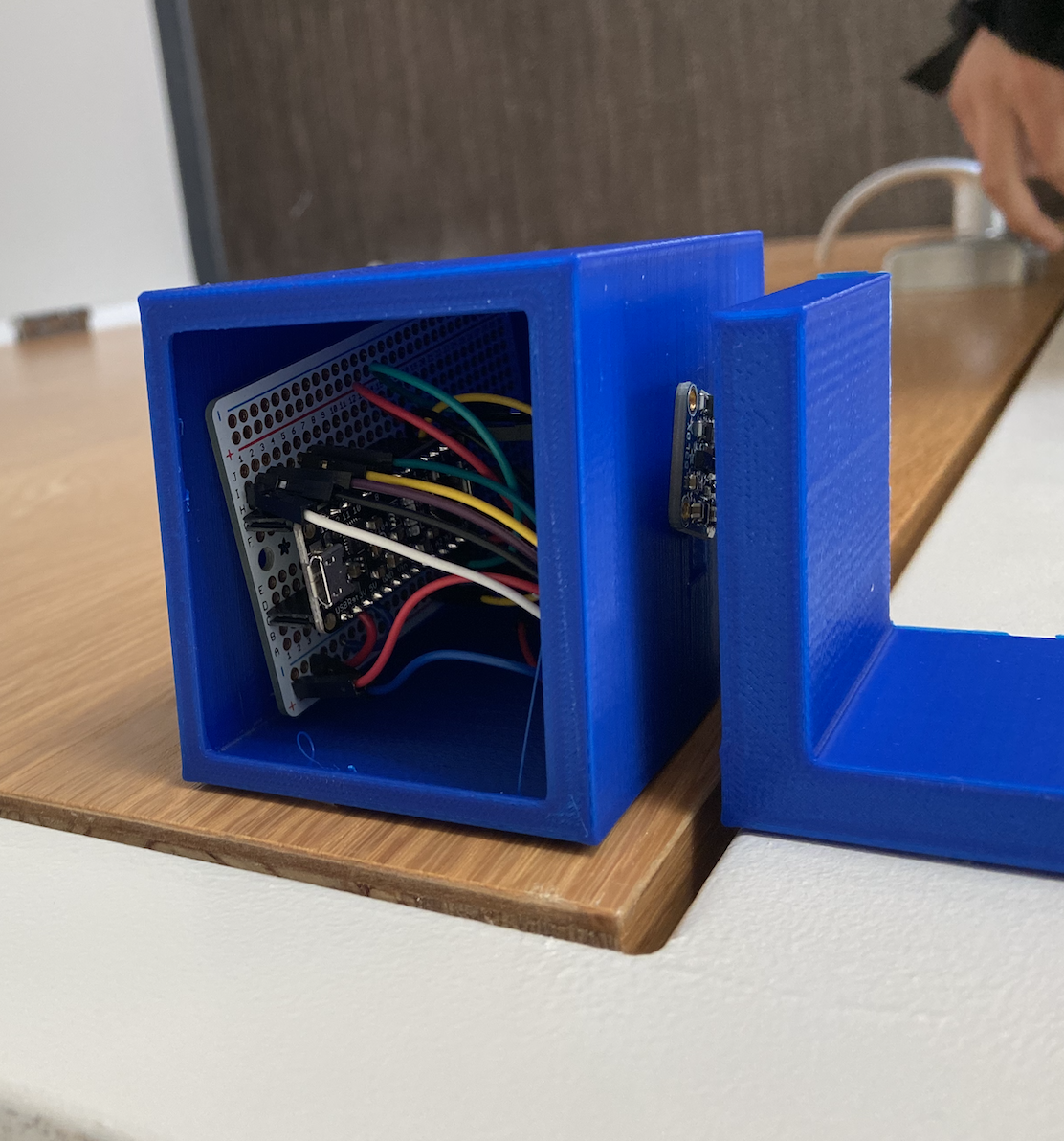
Home security is an issue that affects people all over the world, and while there are home security systems available, they tend to be expensive and tough to install or use. The project we created was a modular home security system that utilized smart home technology in the system. The modular approach was selected as we wanted to create a customizable option for potential consumers of this product - where they could select the modules that work the best for their security configuration. There were two distinct modules in the system, a door motion sensor and a valuable object sensor that would turn on an alarm and send a text notification to alert the user when the system was triggered. The door sensor allows the user to place the module on a door, and once the door is opened past a certain threshold, the system is triggered. Similarly, the valuable object sensor allows the user to place any valuable on the module, and once the item is lifted off of it, it will trigger the system as well. Both modules are controlled by a central control hub system which allows the user to manually turn off the system once it is triggered. Our research focused on the opinions of individuals on home security, and what their thoughts on our new security system were. We asked them to indicate how they felt about their current sense of security in their homes and how, if at all, our project would change that. The survey was conducted through a Google Form to record the answers to our questions, and it also asked them for suggestions or concerns that they had with the project. Future research should continue to examine how to create security systems that are easy to control and use while being efficient and cost effective.
|
Sous Chef |
Sous Chef Recipe AssistantMacey Broadwater, Maddie Carlini, Alejandro Malespin & Tate Ewing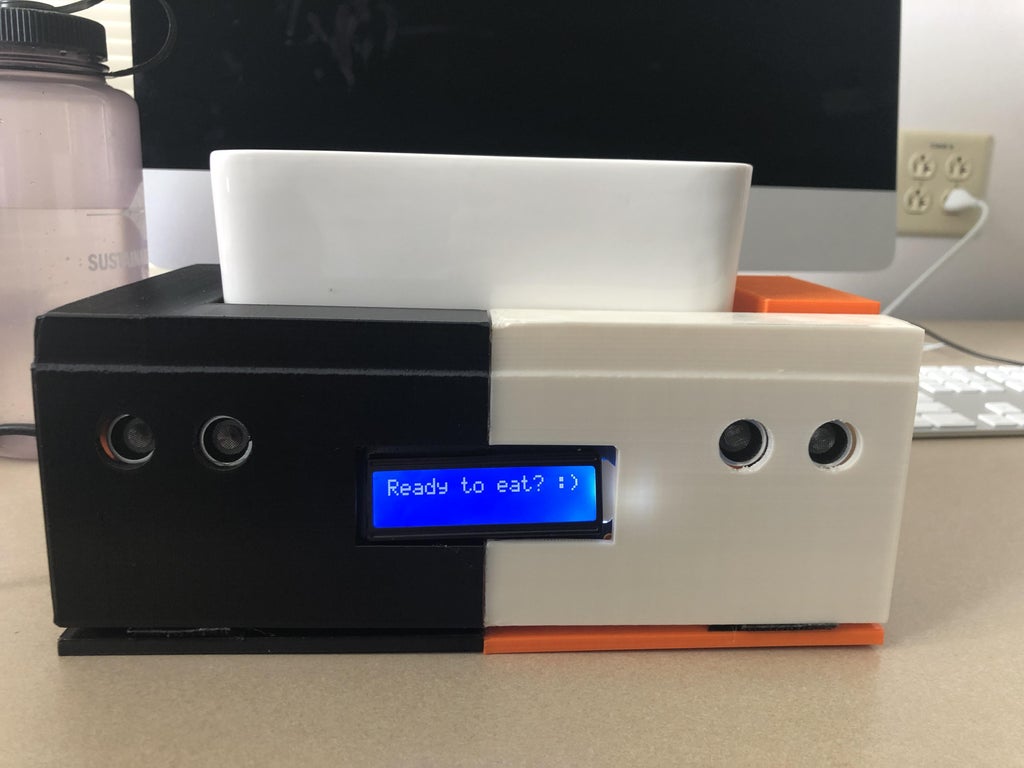
Sous Chef is a robot that takes in user input based on meal type and ingredient preferences, then suggests and scrolls through a recipe using gesture recognition. The robot is meant to be placed in the kitchen, with an herb garden on top for aesthetic purposes as well as fresh ingredients, and we hope the robot would encourage users to try new recipes and home cooked meals. In this study, we investigate the effectiveness of Sous Chef’s technology, including gesture recognition success, readability, and overall enjoyment of the process. Our findings indicate that the scroll gesture and design of the robot were successful, the select gesture needs improvement, and some users would consider purchasing and using a Sous Chef robot.
|